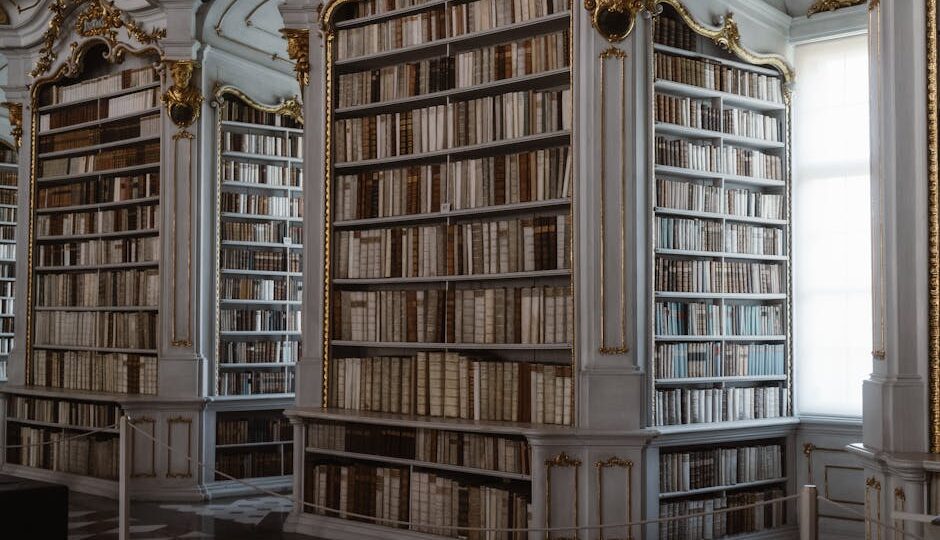
Exploring the World’s Oldest Libraries: A 2026 Adventure
In 2026, embarking on a journey through the world’s oldest libraries offers more than just an exploration of human history; it invites you to traverse a timeline of knowledge and culture. These venerable institutions stand as testaments to mankind’s quest for understanding, capturing the evolution of thought in their ancient walls. This adventure promises not only to fulfill the desires of bibliophiles but also to captivate anyone with an appreciation for history and architecture.
The Ancient Knowledge of Al-Qarawiyyin Library
Our first stop is the Al-Qarawiyyin Library in Fez, Morocco, widely believed to be the oldest existing library in the world. Founded in 859 AD by Fatima al-Fihri, this library is part of the University of Al-Qarawiyyin, the oldest continuously operating educational institution in the world. Walking through its halls is like stepping back into a medieval world where scholars once pored over manuscripts by candlelight.
The library’s expansive collection includes a 9th-century Qur’an written in Kufic calligraphy and a range of works in subjects like astronomy, medicine, and Islamic jurisprudence. A recent renovation has modernized its facilities while retaining its historical charm, making it accessible yet timeless. Visitors today can marvel at the exquisite architecture, characterized by stunning arches and intricate tilework that speak to Morocco’s rich cultural tapestry.
The Vatican Apostolic Library: A Treasure Trove in Rome
The Vatican Apostolic Library in Vatican City is another must-visit. Established in 1475, it houses one of the most significant collections of historical texts and manuscripts in the world, including over 1.1 million printed books, 75,000 codices, and an expansive photographic archive.
A walk through its halls reveals works like the Codex Vaticanus – one of the oldest extant manuscripts of the Greek Bible – and the manuscript of “The Divine Comedy” with illustrations by Sandro Botticelli. With the library’s digitalization efforts, many of these invaluable texts are more accessible than ever, allowing visitors to witness these priceless documents firsthand.
The Bodleian Library: Oxford’s Academic Heart
Nestled in the heart of Oxford, England, the Bodleian Library is as iconic as it is historic. With its origins dating back to 1602, it is one of the oldest libraries in Europe. Known affectionately as “the Bod,” it has served as a key scholarly resource for centuries, housing over 13 million printed items.
Visitors can explore its beautifully preserved medieval reading rooms, such as the Divinity School, which provides a glimpse into the academic setting of yesteryears. The Bodleian’s rich collections include the Gutenberg Bible and the letters of Jane Austen, which continue to draw scholars and tourists alike.
Saint Catherine’s Monastery Library: A Desert Oasis of Knowledge
Tucked away in the Sinai Peninsula, Egypt, lies Saint Catherine’s Monastery, home to one of the oldest libraries globally, founded in the 6th century. This UNESCO World Heritage site is a hidden jewel for those willing to venture into the desert.
The library’s collection is second only to the Vatican in terms of ancient manuscripts, featuring over 3,000 items in various languages, including Greek, Arabic, and Syriac. The library has preserved some of the earliest copies of Christian texts, such as the Syriac Sinaiticus, making it a destination of profound historical significance.
Practical Takeaway for the Modern Traveler
For those planning a visit, it’s crucial to respect the rules and guidelines of each library, as many of these institutions are active research sites. Advance booking may be required, especially for guided tours, and some libraries offer only limited access to their collections.
Embracing technology, many of these ancient institutions have established digital platforms, allowing would-be visitors to preview collections online. This blend of ancient and modern offers a unique opportunity to engage with history from anywhere in the world, making these libraries not just historical landmarks but living entities still contributing to global knowledge.