10 Things You Didn’t Know About the Great Wall of China
The Great Wall of China is one of the most iconic and enduring architectural marvels in human history. Known for its impressive length and historical significance, this ancient structure captivates millions of visitors every year. However, there are several fascinating aspects of the Wall that remain lesser-known. Here, we’ll uncover some intriguing details that might just surprise you.
1. It’s Not Just One Wall
Contrary to popular belief, the Great Wall of China isn’t a single, continuous wall. Instead, it’s a collection of walls and fortifications built during different dynasties. The most famous sections were constructed during the Ming Dynasty, stretching over 8,850 kilometers (5,499 miles). However, the entire network, including branches, trenches, and natural barriers, spans an estimated 21,196 kilometers (13,171 miles) across northern China.
2. The Wall’s Age Goes Beyond the Ming Dynasty
While the Ming Dynasty’s contributions are the most famous, the construction of segments of the Great Wall began as early as the 7th century BC. Early walls were erected by individual states, such as the Chu State, to defend against nomadic raids. These early walls were primarily built using tamped earth, unlike the stone and brick used in later constructions.
3. The Great Wall Wasn’t Built to Repel Mongols Alone
Though the Wall is often associated with defense against Mongolian invaders, it served multiple purposes over the centuries. It was a means of border control, allowing for the imposition of duties on goods, regulation of trade, and control of immigration and emigration. It protected trade along the Silk Road and served as a communication line, with smoke signals being used to convey messages rapidly across long distances.
4. A Mass of Laborers Built the Wall
The construction of the Wall was a colossal task that involved hundreds of thousands of soldiers, peasants, prisoners, and even convicts. The labor force that worked on the Wall experienced harsh conditions, and it’s estimated that hundreds of thousands lost their lives during its construction. It is sometimes referred to as the “longest cemetery on Earth” for this reason, as many workers were buried in its vicinity.
5. It’s Visible from Space? Not Exactly
A common myth is that the Great Wall is visible from space with the naked eye. However, astronauts have debunked this myth, stating that it’s challenging to distinguish the Wall from the surrounding environment without aid. The Wall’s materials, similar in color to the natural landscape, make it difficult to spot from orbit.
6. The Wall’s Length Was Officially Measured Recently
Despite being an ancient wonder, the comprehensive measurement of the Great Wall was conducted only recently. In 2012, the State Administration of Cultural Heritage and the State Bureau of Surveying and Mapping completed a five-year survey and confirmed the Wall’s length at 21,196 kilometers. This extensive project mapped every known section, revealing sections previously lost to history.
7. It’s a UNESCO World Heritage Site
In 1987, the Great Wall of China was designated a UNESCO World Heritage Site. The designation acknowledges the Wall’s significance as a masterpiece of human ingenuity and as an enduring symbol of China’s historical strength. The UNESCO status has helped in preserving and restoring parts of the Wall, ensuring its survival for future generations.
8. The Wall Has a Unique Architecture
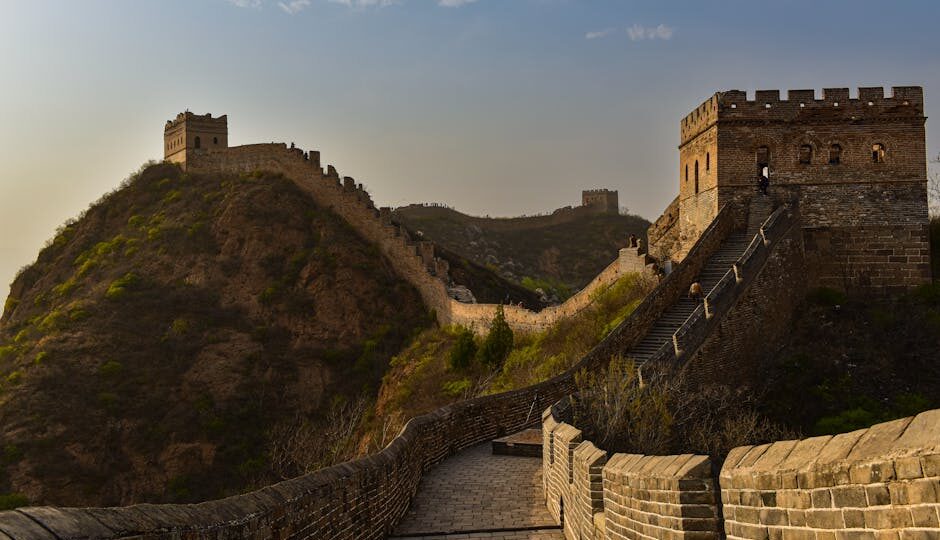
Beyond its sheer length, the Great Wall’s architecture is marvelously diverse. Various sections exhibit different construction techniques and materials, including brick, tamped earth, wood, and stone, reflecting the geographical and resource variations across China. The Wall includes watchtowers, troop barracks, garrison stations, and signaling capabilities throughout its expanse.
9. The Wall Is a Habitat for Diverse Wildlife
Beyond its historical significance, the Great Wall is also a living habitat for diverse species of flora and fauna. In regions like the Jinshanling section, travelers can spot rare plant species and wildlife like the elusive leopard or the endangered Asiatic black bear. Conservation efforts are ongoing to protect these living treasures within the Wall’s shadow.
10. Modern-day Restoration Efforts Are in Place
Despite the Wall’s grandiose image, time has taken its toll. Large sections are in disrepair due to erosion and vandalism. To combat this, ongoing restoration projects aim to preserve its glory. Notably, the Simatai section has become a model for conservation, balancing restoration with maintaining historical authenticity. Visitors can see firsthand how these efforts help keep the Wall standing strong.
Whether you’re a history buff or simply a curious traveler, these facts about the Great Wall of China enrich your understanding of its complex narrative. And if you’re planning a visit, consider exploring lesser-known sections for a more intimate experience away from the bustling crowds.